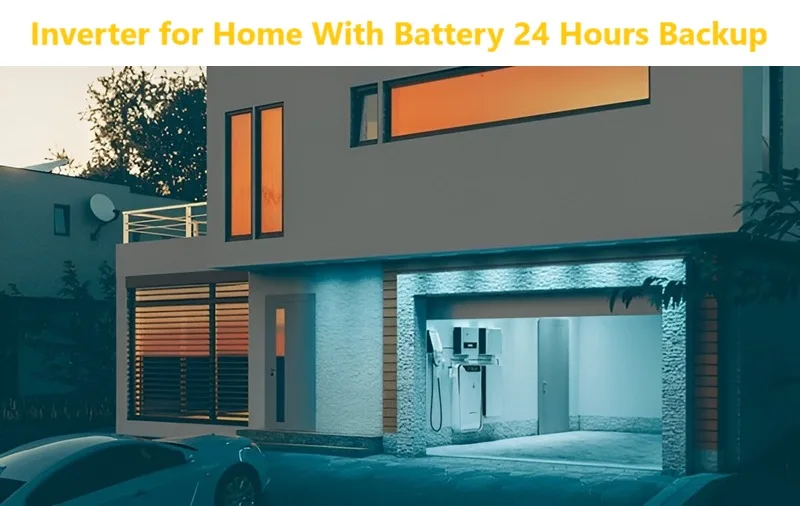

Inverter for Home With Battery 24 Hours Backup
Power cuts are nonetheless common in lots of parts of India and different countries, and having a dependable inverter for home with battery 24 hours backup can be a lifesaver. Whether it’s to hold fans and lighting strolling, strengthen your refrigerator, or make certain your Wi-Fi and TV don’t prevent it, a nicely-selected inverter and battery mixture can make your existence greater cushty throughout outages.
In this blog, we’ll explain what an inverter is, a way to choose the right battery, how an awful lot of backup you really need, and which inverter + battery combos are fine for 24 hour usage.
What is a Home Inverter?
An inverter is an electrical tool that converts DC (Direct Current) stored in batteries into AC (Alternating Current), which powers your house appliances. Since most household gadgets run on AC, the inverter acts because of the bridge among stored strength and your devices.
Why Do You Need 24 Hours Backup?
-
Long power cuts during summer months.
-
Running essential appliances like refrigerators, fans, or medical devices.
-
Work-from-home needs such as computers and internet routers.
-
Peace of mind during storms, outages, or in rural areas with unreliable electricity.
How to Calculate Inverter + Battery Size for 24 Hours Backup
Before buying, you must calculate your total load and backup requirement.
-
List your appliances
Example:-
1 Refrigerator: 200 W
-
4 Fans: 100 W
-
5 LED lights: 60 W
-
Router + TV: 100 W
Total = 460 W (~500 W)
-
-
Energy needed
500 W × 24 h = 12,000 Wh = 12 kWh -
Battery capacity
If using a 24V system:
12,000 Wh ÷ 24 V = 500 Ah (approx).
Considering 80% efficiency, you may need ~600 Ah at 24V. -
Inverter capacity
Choose an inverter of 1000–2000 VA to handle both running load and starting surge (especially for refrigerators).
Types of Batteries for 24 Hours Backup
-
Lead-Acid Batteries
-
Affordable
-
Needs regular water top-up and maintenance
-
Good for 3–5 years
-
-
Tubular Batteries
-
Higher lifespan (5–7 years)
-
Handles deep discharge better
-
Popular for homes
-
-
Lithium-ion / LiFePO₄ Batteries
-
Maintenance-free
-
Longer life (7–10+ years)
-
Compact, lightweight, but expensive
-
Pure Sine Wave vs Modified Sine Wave Inverters
-
Pure Sine Wave: Best for sensitive electronics (TV, fridge, laptops, Wi-Fi). Runs appliances smoothly without noise.
-
Modified Sine Wave: Cheaper, but may cause humming in fans and is not recommended for high-end electronics.
For 24-hour use, always go with pure sine wave inverters.
Best Inverter + Battery Combos for 24 Hours Backup
Here are some popular options you can find online or at local dealers:
1. Luminous Optimus 2800 + 2×150Ah Tubular Batteries
-
Inverter: 2500 VA, Pure Sine Wave
-
Backup: Up to 12–14 hours for medium load
-
Price: Around ₹45,000 – ₹55,000
-
Best for: Homes with fridge, fans, lights, router
2. Exide 150Ah Tall Tubular + Luminous Zelio 1100
-
Inverter: 900 VA
-
Backup: 8–10 hours (extendable with double battery)
-
Price: ₹25,000 – ₹30,000
-
Best for: Small families with light to medium loads
3. Okaya 200Ah Tubular Battery + Pure Sine Wave Inverter
-
Backup: Up to 10–12 hours for ~400W load
-
Price: ₹30,000 – ₹35,000
-
Best for: Mid-range homes
4. Lithium-ion Home UPS (5 kWh – 10 kWh)
-
Compact wall-mounted design
-
24-hour backup for 500W load
-
Price: ₹1,00,000+ (premium, but maintenance-free)
-
Best for: Urban homes, work-from-home users
Tips for Choosing the Right System
-
Calculate your exact load (don’t guess).
-
Decide if you need full 24-hour backup or just for essentials.
-
Prefer higher Ah batteries for longer backup.
-
Go for tubular or lithium batteries for durability.
-
Ensure proper wiring, ventilation, and installation by certified electricians.
Cost of a 24-Hour Backup Setup
-
Small home setup (lights, fans, router): ₹20,000 – ₹35,000
-
Medium home setup (fridge + fans + TV): ₹40,000 – ₹70,000
-
Full 24-hour backup with lithium system: ₹1,00,000+
Conclusion
A dependable inverter for domestic with battery 24 hours backup can turn disturbing strength cuts into fear-free comfort. By carefully calculating your load, selecting the proper inverter, and pairing it with long lasting batteries, you can make certain uninterrupted energy at home.
If budget allows, lithium-ion is the destiny of home backup structures. But for most families, tubular battery + pure sine wave inverter stays the best for stability of price, performance, and sturdiness.