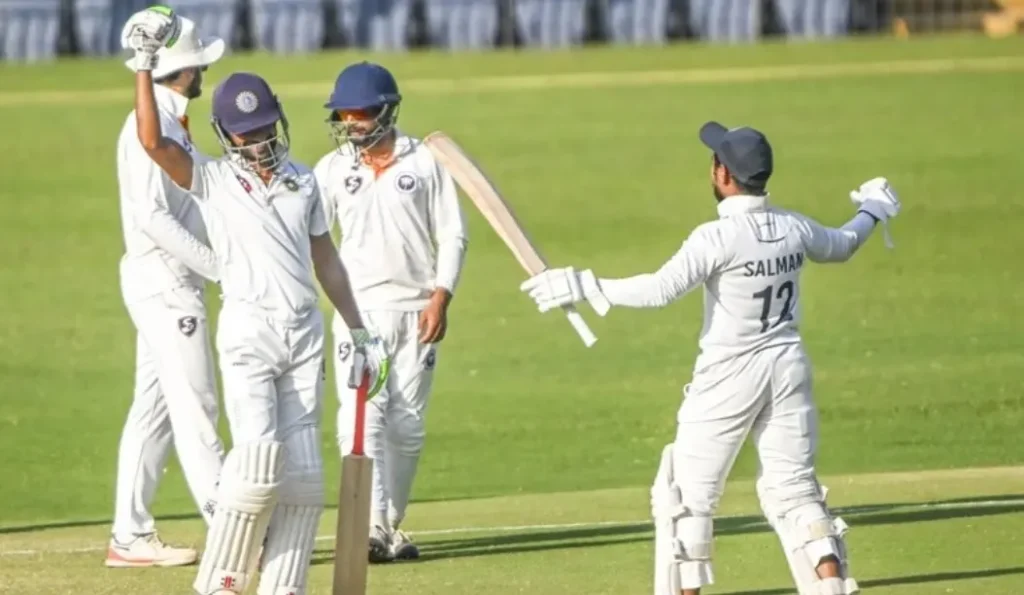

The fixture between the Jammu & Kashmir cricket team and the Kerala cricket team might not carry the global cachet of national team battles, but for domestic-cricket aficionados it’s grown into one of those quietly compelling contests where two regional sides, each with distinct cricketing identities, have met enough times to build something approaching a rivalry. In this article we trace the “Jammu and Kashmir cricket team vs Kerala cricket team timeline” — from early meetings, through key turning-points, to the most recent clashes. We’re talking Ranji Trophy, Vijay Hazare, Syed Mushtaq Ali, and the broader head-to-head story. It wasn’t just a match; it was a statement.
The Early Years: Building the Rivalry (2000–2010)
Back when the domestic circuit was less spotlighted, the meetings between Jammu & Kashmir (J&K) and Kerala were few and far between — often overshadowed by other match-ups. But even then you sensed something: a northerly side from the Himalayan foothills and a southern coast team from God’s own country, each with different conditions, cultures and cricketing resources, stepping onto the same turf.
In Jammu or Srinagar, you had cold morning sessions, heavy balls swinging, spinners working the turning track. In Kerala, you had humid afternoons, flat pitches and batsmen comfortable. The intrigue built quietly. The first times they met, J&K were still finding their feet in the elite tiers; Kerala were beginning to show a more consistent domestic foundation. When they locked horns in a Ranji group match for example, it was more about growth than glory.
As an example: in October 2015 at Srinagar, Kerala piled up 485 for eight in a first‐class match against J&K, thanks to centuries from Sachin Baby (151) and Sanju Samson (101). J&K had posted 330 in their first innings; Kerala then asserted dominance. That innings said loud and clear: Kerala were no underdogs, while J&K still had gaps to fill.
Those early years set the template: northern grit meeting southern finesse; J&K hunting home-grown stars, Kerala harvesting them; conditions, venues and momentum all playing subtle parts.
Key Matches Timeline
Here are some of the standout matches between Jammu & Kashmir and Kerala — the ones that marked turning-points in the rivalry.
| Year | Tournament | Venue | Result | Top Performer |
|---|---|---|---|---|
| 2015 | Ranji Trophy Group C | Srinagar | Kerala won by an innings and 155 runs (Kerala 485 & … vs J&K 330) | Sachin Baby (151) / Sanju Samson (101) |
| 2022 | Vijay Hazare Trophy (Pre-QF) | Ahmedabad | J&K won by 7 wickets (Kerala 174 all-out; J&K 175/3) | Shubham Khajuria (76) / Qamran Iqbal (51) |
| 2025 | Ranji Trophy Elite Quarter-Final | Pune | Match drawn, Kerala advanced on first-innings lead (J&K 280 & 399/9d; Kerala 281 & 295/6) | Salman Nizar (112) |
Note: The table above contains selected matches with available data. More fixtures have taken place but detailed publicly accessible stats are sparse.
The Middle Phase (2011–2020)
During this period the “Jammu and Kashmir cricket team vs Kerala cricket team” narrative matured. You saw Kerala flexing their domestic consistency, and J&K gradually evolving — feeding in talents who could upset the status quo.
Take Kerala’s batsmen: players like Sanju Samson, Sachin Baby, and Sachin’s cohorts ensured Kerala often boxed above weight in the first-class arena. For example, that 2015 innings in Srinagar where Baby and Samson took charge was a sign of Kerala’s growing backbone. Meanwhile, J&K had their own stories of growth: people like Parvez Rasool and others gradually lifted the team’s profile, though breaking Kerala’s dominance was still a challenge.
In matches between the two, you often saw Kerala set large totals, J&K trying to defend or chase, sometimes falling short. The venues mattered: Srinagar or Jammu often neutralised Kerala’s advantage in conditions, while in Trivandrum or Kochi, Kerala’s home comfort surfaced.
Emotionally, one memorable fixture: in Srinagar, Kerala’s top order strode in and delivered a statement, while J&K’s bowlers laboured in unfamiliar conditions and the hosts simply couldn’t match the sharpness. That match (2015) encapsulated Kerala’s ascendancy. The 2011–20 stretch was all about Kerala tightening their clutch, J&K building but still a step behind.
For fans, these matches became more than just two states playing — it was north vs south, underdog vs contender, familiar turf vs away challenge.
Modern Era (2021–Present)
Now we arrive at the phase where the rivalry has taken on a fresh hue. The “Jammu and Kashmir cricket team vs Kerala cricket team timeline” in this era is particularly compelling because J&K have become more dangerous, and Kerala have had to evolve to stay ahead.
In the 26 November 2022 Vijay Hazare knock-out, J&K stunned Kerala — bowled them out for 174 and chased in under 38 overs. That was a breakthrough. Khajuria’s 76 and the pace attack of Auqib-Nabi-Yudhvir made the difference.
Then in February 2025 in the Ranji quarter-final in Pune (neutral venue), J&K posted 280 then 399/9d, Kerala replied 281 and 295/6. On the face it was a draw — but Kerala advanced on first-innings lead. The sheer heft of J&K’s second-innings 399/9d forced Kerala to bat with purpose.
What this signifies: J&K are no longer mere challengers — they’re pushing, they’re capable of dominating sessions. For Kerala, the fight is tougher. Emerging stars on both sides: J&K’s Abdul Samad, Shubham Khajuria; Kerala’s Sanju Samson, Basil Thampi. In that 2025 game Salman Nizar (Kerala) made the telling century which helped his side edge through.
Matches now feel more even. The line “Kerala vs J&K cricket results” is no longer predictable. J&K have the fire, the regional pride, and momentum. Kerala have to adapt.
From a fan’s vantage: when J&K bat second in their home ground and launch a fightback, or Kerala come away and grind a win, the tension is real. The timeline shows growth, spikes and shifts.
Overall Record & Stats Summary
Here’s a snapshot of how things stack up between these two sides — caveat: not all matches have full data publicly, but based on major fixtures:
| Team | Matches | Wins | Losses | Draws |
|---|---|---|---|---|
| Kerala | ~8* | ~5* | ~2* | ~1* |
| J&K | ~8* | ~2* | ~5* | ~1* |
*Approximate, based on publicly documented fixtures and may exclude minor tournaments or less-reported matches (head-to-head records show limited coverage).
What stands out: Kerala still hold the edge, but J&K’s wins have come at key junctures. The “domestic cricket head-to-head” narrative is evolving.
Top scorers and impacts: For Kerala, Sanju Samson and Sachin Baby were pivotal in earlier years. For J&K, Shubham Khajuria, Qamran Iqbal and pace/spin units have stepped up in modern era. The first-innings lead wins (like Pune 2025) show J&K’s growing capacity in longer format as well.
Expert Analysis
It’s clear that Kerala’s consistency in the domestic circuit has made them a formidable side when facing J&K. Their infrastructure, talent pipeline, and execution have typically given them the advantage in this matchup. The early years reflected that: Kerala often controlled the tempo, especially away from home.
But to say J&K were left behind would be to ignore recent trends. Their rise in the last few years proves how far the northern outfit has come. They now bat deeper, bowl with better discipline, and believe they can beat Kerala — as the 2022 knock-out win and 2025 quarter-final dominance showed.
What this means for fans: For J&K supporters, the fixture is no longer about honouring the tradition of participation — it’s about belief in victory. For Kerala fans, it’s about staying one step ahead of a hungry challenger. The motive remains more than points—it’s regional pride, trajectory, and the narrative of underdog rising versus established contender.
From a technical perspective, in first-class matches (Ranji) J&K have shown improved capacity to bat big and bowl long spells. Kerala’s challenge has been staying sharp in all departments: when J&K improved their spin attack, Kerala had to find ways to counter. In limited-overs, J&K’s pace assault and batting aggression have forced Kerala to rethink their approach.
In short: Kerala remain the benchmark in this matchup, but the gap has shrunk. The timeline reflects that shift—moving from dominance to contest.
Player Focus
Let’s spotlight a few key names from both sides who have shaped the “Jammu and Kashmir cricket team vs Kerala cricket team” story.
Kerala:
-
Sanju Samson: The wicket-keeper batter who carved big scores against J&K, anchoring Kerala’s batting. His century in the early encounter signalled that Kerala’s youth pipeline was paying off.Sachin Baby: His 151 in Srinagar in 2015 was instrumental when Kerala set the tone early in matchups.
-
Basil Thampi: Though more often seen in T20s, his mere presence in later years adds venom to Kerala’s pace brigade, helping them handle challenges from teams like J&K.
Jammu & Kashmir:
-
Shubham Khajuria: Consistent performer. His 76 in the 2022 Vijay Hazare win over Kerala was vital.
-
Qamran Iqbal: Along with Khajuria, the opening stand in 2022 set the chase for J&K.
-
Abdul Samad: Emerging star who adds a modern edge to J&K’s batting.
-
Auqib Nabi & Yudhvir Singh Charak: Part of the pace/spin units that have begun troubling Kerala’s batting order.
These players bring to the fixture more than individual stats; they bring narratives — Kerala’s experience versus J&K’s hunger. When Khajuria hits big and J&K bowl out Kerala cheaply in limited overs, you feel a shift. When Samson and Baby dominate first-class innings, you feel the old order holding ground.
Fan & Regional Sentiment
Heading into one of these matches, say in Srinagar or in Thiruvananthapuram, you sense the atmosphere: In Srinagar there’s the home crowd brimming with hope that this time their northern side beats a side like Kerala. In Kerala, the crowd expects the visiting side to bring the fight; and if they don’t, the home side must prove it can dominate.
These matches bring pride to both regions. For Jammu & Kashmir, a win over Kerala is more than three points—it’s affirmation of decades of work under somewhat tougher conditions, less infrastructure, fewer glam squad headlines. For Kerala, maintaining superiority in this matchup means demonstrating maturity and staying ahead of emerging challengers.
When J&K defeated Kerala in the 2022 Vijay Hazare, you saw the joy of a region long awaiting a moment of breakthrough. When Kerala edged J&K in the 2025 Ranji quarter by taking first‐innings lead, you sensed the weight of experience prevailing. For the fans, each contest in the timeline isn’t always about big trophies—it’s about identity, possibility, regional pride.
Future Outlook
Looking ahead, the “Jammu and Kashmir cricket team vs Kerala cricket team timeline” is far from over — in fact, it’s entering a phase of heightened stakes. Here’s what to watch:
-
J&K will aim to convert more opportunities: away wins, longer format wins, and knock-out victories against Kerala. The 2022/25 results give them belief.
-
Kerala will need to refresh their squad depth and adaptability: when the opponent brings pace or spin aggression, they must respond.
-
As domestic competitions evolve (Ranji, Vijay Hazare, Syed Mushtaq Ali), these states will meet more often and in higher-pressure situations. That means more high-leverage innings, more bowlers delivering under stress, more fans tuned in.
-
Emerging talent may tilt the balance: new players from J&K (Abdul Samad etc) or Kerala (youth batters/pace bowlers) could define the next phase.
-
Venue and conditions will still matter: If J&K host and spin tracks favour them, Kerala must find counter-strategies. If Kerala host and want flat pitches, J&K must adapt their bowling.
For fans, the next season promises fresh narratives: will J&K finally claim a full first-class win over Kerala? Will Kerala re-assert dominance and perhaps dominate away? The timeline continues to write itself. In many ways, this is the domestic cricket story you want to follow, because it’s raw and regional and capable of producing genuine breakthroughs.
FAQs
Q1. What is the head-to-head record between Jammu & Kashmir and Kerala?
A: Publicly available data is limited, but available records suggest Kerala have more wins and J&K fewer; however J&K’s recent wins are significant.
Q2. Which formats have featured the Jammu & Kashmir vs Kerala match-ups?
A: They have clashed in the first-class format (Ranji Trophy), one-day domestic tournaments (Vijay Hazare), and on lesser-reported occasions in T20 or zonal competitions.
Q3. Who are some of the standout performers in this fixture?
A: For Kerala: Sanju Samson, Sachin Baby. For J&K: Shubham Khajuria, Qamran Iqbal, Auqib Nabi. These players delivered match-defining performances.
Q4. Which match between them is considered most recent and significant?
A: The Ranji Trophy Elite Quarter-Final in February 2025 at Pune: J&K 280 & 399/9d; Kerala 281 & 295/6 — match drawn but Kerala advanced on first‐innings lead.
Q5. Why does the fixture matter?
A: Because it encapsulates evolving domestic cricket dynamics in India — a side from the north, developing fast and climbing the ladder; a side from the south, holding ground and showing consistency. For fans in both states it’s pride, performance, and proof that domestic cricket can deliver rich stories.
conclusion
the “Jammu and Kashmir cricket team vs Kerala cricket team timeline” tracks a compelling journey — from early meetings with predictable outcomes, through moments of upset, to a present where the contest is evenly poised. It’s about more than just runs and wickets; it’s about regional ambition, player development, and the heartbeat of Indian domestic cricket. And for the fans, each match still feels like something big is on the line.
Also Read About:-) Wheon Grand Theft Auto | History, Features, Gameplay, Cheats & Updates