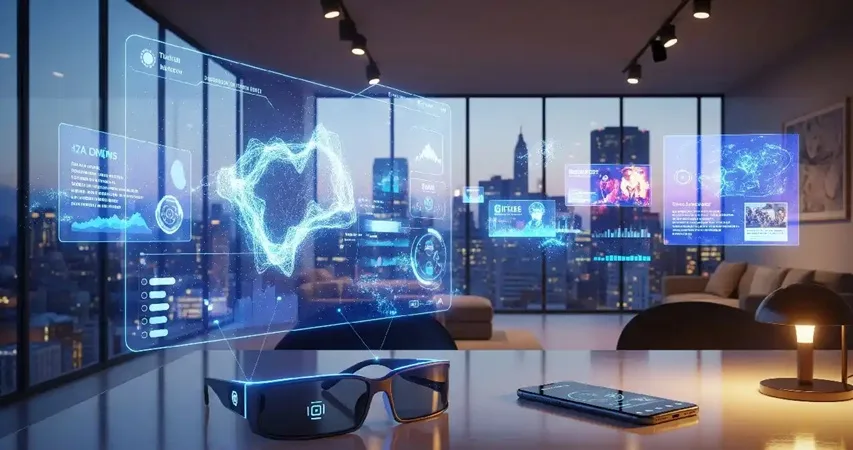

Introduction:Tech Giants Envision Future Beyond Smartphones
For nearly two decades, smartphones have ruled as the centerpiece of modern technology. From the first iPhone in 2007 to today’s foldable displays and AI-driven apps, these handheld devices have revolutionized communication, entertainment, and work. But as innovation plateaus and user engagement shifts toward more immersive experiences, global tech giants are envisioning a future beyond smartphones — one powered by artificial intelligence, augmented reality (AR), wearable tech, and ambient computing.
Why the Smartphone Peak Is Near
While global smartphone sales still generate billions annually, the growth curve has flattened. According to IDC, shipments have declined in several major markets since 2022. Consumers now hold onto their devices longer, as hardware improvements feel incremental. Instead, excitement is shifting to next-generation platforms that promise more intuitive and immersive interaction.
Key Indicators of the Shift
-
Slower upgrade cycles: Average replacement time for smartphones has stretched to over 3 years.
-
Emergence of AR/VR ecosystems: Companies are prioritizing wearables and spatial computing over traditional phones.
-
AI integration: Voice assistants and generative AI tools are reducing dependence on touchscreens.
Apple: From iPhone to Vision Pro and Beyond
No company symbolizes the smartphone era like Apple. Yet, its recent innovations reveal where the tech landscape is heading.
The Vision Pro Revolution
Apple’s Vision Pro headset, unveiled in 2024, signals a new era of “spatial computing.” Instead of tapping screens, users navigate with gestures, eye tracking, and voice. It merges digital content with the physical world, making screens secondary to the overall experience.
Wearables Ecosystem Expansion
Apple Watch and AirPods already account for billions in revenue. Together, they create a seamless network of devices — an early example of a post-smartphone ecosystem where data, health metrics, and media flow freely without a single dominant gadget.
Apple’s Strategy: Redefine interaction, not replace devices. The future may not eliminate the iPhone but instead integrate it invisibly into a network of connected wearables and AR systems.
Google: The Age of Ambient AI
Google’s approach to the future beyond smartphones centers on ambient computing — technology that fades into the background but responds intelligently to users’ needs.
Pixel, Gemini, and the Power of Integration
The Pixel ecosystem is designed around Google’s AI models, especially Gemini, the company’s advanced large language model (LLM). These tools allow real-time translation, task automation, and predictive assistance across devices — from smart glasses to smart homes.
Project Starline and AR Glasses
Google’s Project Starline, which enables lifelike 3D video calls, and its rumored return to AR glasses development, showcase a focus on immersive communication beyond screens.
Google’s Vision: A world where you don’t need to “use” technology — it simply exists around you, anticipating intent.
Samsung: Building a Wearable and Foldable Future
As one of the world’s largest smartphone makers, Samsung recognizes both the power and the limits of handheld devices.
Foldables and Flexibles
Samsung’s Galaxy Z Fold and Flip lines represent the company’s bridge between smartphones and hybrid devices. These are precursors to future flexible screens that could expand into wearables or even holographic projections.
AI-Powered Ecosystem
In 2025, Samsung announced deeper AI integration across appliances and devices, allowing seamless connectivity from smart TVs to refrigerators — all part of its SmartThings ecosystem. This shift aims to create a “super device” experience without relying solely on a smartphone interface.
Samsung’s Strategy: Transition users gradually from smartphone dependence to a networked ecosystem of intelligent, flexible, and wearable tech.
Meta (Facebook): Betting on the Metaverse
Meta has been loudest in declaring that the next evolution of technology lies beyond the smartphone — inside the metaverse.
Quest Headsets and Ray-Ban Smart Glasses
Meta’s Quest 3 headset and Ray-Ban Meta smart glasses offer real-world examples of the transition toward mixed reality. With built-in AI assistants, cameras, and live streaming, these devices make social and professional interaction less screen-centric.
The Metaverse Vision
Mark Zuckerberg’s long-term ambition is a digital universe where work, play, and social life converge through VR and AR. While critics question adoption rates, Meta’s investments in neural interfaces and lightweight AR wearables suggest the company is playing the long game.
Meta’s Vision: Make digital identity as natural as physical presence.
Microsoft: The Enterprise Metaverse and AI Co-Pilot
Microsoft envisions a post-smartphone world led by productivity and enterprise experiences.
AI Everywhere
The company’s Copilot AI, embedded across Windows, Office, and Teams, demonstrates how AI-driven assistance is replacing app-centric workflows. Devices no longer define productivity — intelligent software does.
Mesh and HoloLens
While the HoloLens headset hasn’t achieved mass adoption, its technology is foundational for Microsoft’s Mesh platform, enabling virtual meetings and 3D collaboration — potentially the “Zoom” of the future.
Microsoft’s Goal: Redefine work from device-centric to experience-centric environments.
Amazon: Voice as the New Interface
Amazon’s Alexa ecosystem represents another step toward a hands-free, post-smartphone interface.
From Echo Devices to Ambient Intelligence
With Alexa integrated into cars, homes, and wearables, Amazon has made voice interaction an everyday norm. The company’s investment in contextual AI enables devices to predict user needs, transforming homes into intelligent ecosystems.
Amazon’s Bet: Voice and context will replace screens as the main interaction mode.
Emerging Trends Shaping the Future Beyond Smartphones
The race to a post-smartphone world is not defined by one product but by a web of innovations connecting people, data, and experiences seamlessly.
1. AI Companions and Personalized Agents
AI assistants like ChatGPT, Gemini, and Copilot are evolving into digital companions capable of real-time reasoning, planning, and emotional interaction — eliminating the need for constant screen time.
2. Augmented and Virtual Reality (AR/VR)
Spatial computing allows users to live inside digital content, transforming entertainment, education, and remote work.
3. Wearable Health Tech
Smart rings, neural sensors, and fitness trackers will soon monitor everything from stress levels to brain activity — making the smartphone’s health-tracking features obsolete.
4. Brain-Computer Interfaces
Companies like Neuralink are developing direct connections between the human brain and machines — an ultimate leap beyond handheld devices.
5. Smart Homes and IoT Ecosystems
Connected devices are already learning patterns and preferences. Future environments will adapt dynamically — adjusting lighting, temperature, and media based on your mood or schedule.
Challenges to a Post-Smartphone Future
Despite the optimism, the transition won’t be easy.
-
Privacy and data security will become even more critical as devices collect intimate data.
-
Hardware costs for AR/VR remain high, limiting accessibility.
-
Ecosystem fragmentation may frustrate users — especially if brands create incompatible systems.
-
Human adaptation: It will take time for people to trust and adopt non-screen interfaces.
The Road Ahead: Hybrid Reality and Seamless Connectivity
The future beyond smartphones isn’t about abandoning devices but making technology invisible — seamlessly woven into daily life. We’re moving from “mobile-first” to “context-first” computing, where the environment responds intelligently to who you are, what you’re doing, and what you need.
As Apple, Google, Samsung, Meta, Microsoft, and Amazon redefine their ecosystems, the next decade will likely witness the birth of ambient, intuitive, and human-centered technology — one that transcends the limitations of a handheld screen.
Conclusion: Tech Giants Envision Future Beyond Smartphones
Smartphones will not disappear overnight, but their dominance is fading as new platforms emerge. From spatial computing and AI companions to wearable intelligence and AR ecosystems, the future promises a more connected, responsive, and human form of technology. Tech giants aren’t just building new devices — they’re building a new reality.